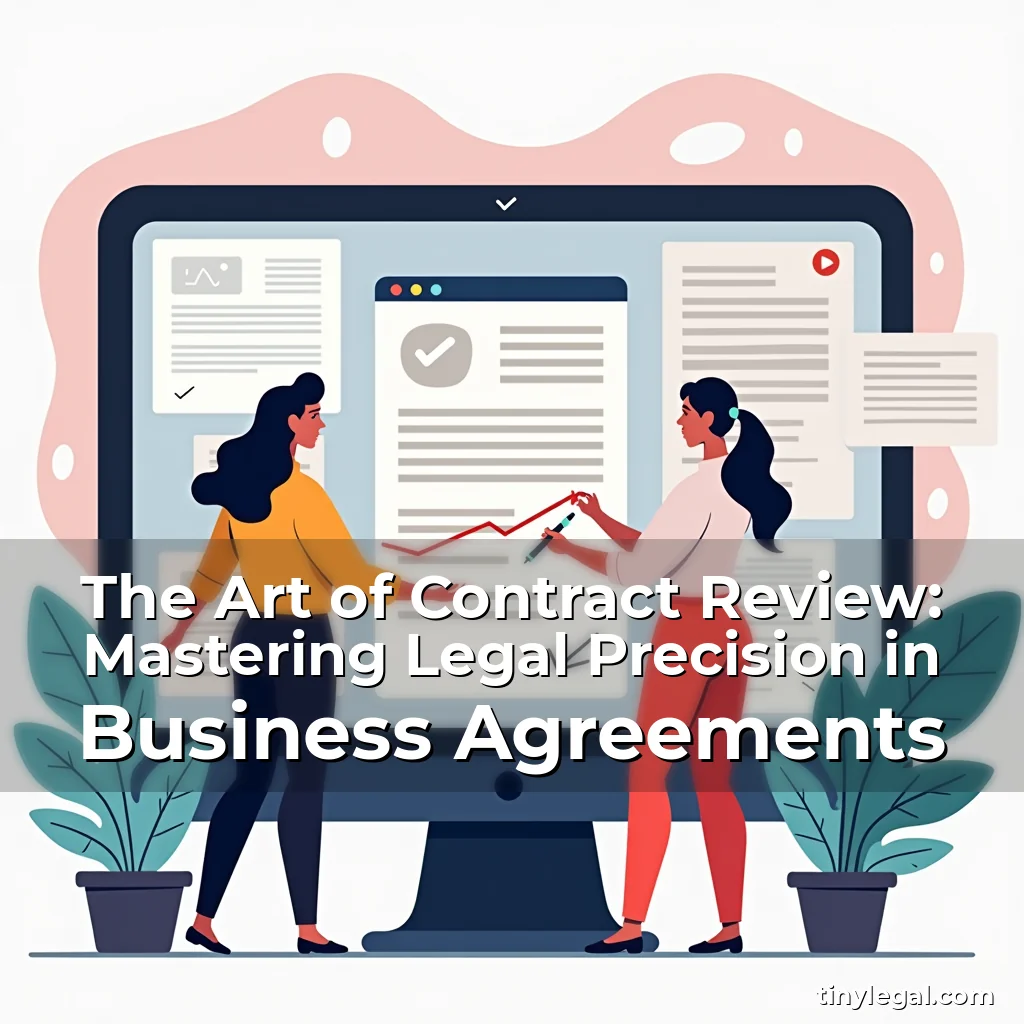
The Art of Contract Review: Mastering Legal Precision in Every Clause
In today’s fast-paced business environment, contract review is not merely an administrative task—it’s a strategic necessity that can determine the success or failure of any agreement. Whether you’re negotiating a partnership deal, entering into employment contracts, or managing vendor relationships, the ability to scrutinize legal documents thoroughly ensures clarity, reduces risk, and aligns expectations between parties.
This guide delves deep into the world of contract review, offering actionable insights, practical strategies, and expert tips tailored specifically for individuals and small businesses navigating complex contractual obligations without the need for expensive legal counsel.
Understanding the Purpose of Contract Review
A well-conducted contract review serves as the first line of defense against potential disputes, misunderstandings, and financial liabilities. It allows both parties involved in a contract to ensure that their rights, responsibilities, and obligations are clearly defined and mutually agreed upon before signing.
By carefully reviewing each clause, parties can identify ambiguities, inconsistencies, or unfavorable terms that may have been overlooked during initial negotiations. This process helps prevent future conflicts by setting clear boundaries and expectations from the outset.
Moreover, contract reviews play a crucial role in ensuring compliance with relevant laws and regulations. They help verify whether the proposed agreement adheres to industry standards and statutory requirements, reducing the likelihood of legal challenges down the road.
The Key Components of Effective Contract Review
An effective contract review involves examining various components such as definitions, scope of work, payment terms, termination clauses, dispute resolution mechanisms, confidentiality provisions, and liability limitations. These elements form the foundation of any legally binding agreement.
Focusing on these key areas enables reviewers to spot discrepancies or gaps that could lead to misinterpretations later on. For instance, vague language regarding deliverables might result in disagreements over what constitutes satisfactory performance under the contract.
- Definitions: Clear and precise definitions avoid confusion about critical terms used throughout the document.
- Scope of Work: A detailed description of services or products provided prevents ambiguity around project expectations.
- Payment Terms: Specifying amounts, schedules, penalties, and methods ensures transparency and accountability.
- Termination Clauses: Outlining conditions under which either party can end the agreement protects both sides’ interests.
- Dispute Resolution: Including mediation or arbitration processes provides structured solutions when conflicts arise.
- Confidentiality Provisions: Protect sensitive information shared between parties during collaboration.
- Liability Limitations: Setting caps on damages or exclusions for certain types of claims mitigates exposure risks.
The Importance of Professional Expertise in Contract Reviews
While self-reviewing contracts can be beneficial for minor agreements or standard templates, involving professional expertise becomes essential when dealing with high-stakes deals or highly specialized industries. Legal professionals bring invaluable knowledge and experience that can uncover hidden pitfalls often missed by non-experts.
Lawyers trained in contract law understand nuances related to jurisdictional differences, regulatory frameworks, and precedent cases that influence interpretation. Their involvement adds another layer of protection against unforeseen consequences resulting from poorly drafted contracts.
Additionally, attorneys provide objective perspectives free from emotional biases that sometimes cloud judgment during negotiation phases. They act as neutral mediators who prioritize long-term benefits over short-term gains while maintaining ethical integrity throughout discussions.
Common Pitfalls to Avoid During Contract Review
Mistakes made during the early stages of contract evaluation can have far-reaching implications. One common error is overlooking seemingly insignificant clauses due to time constraints or lack of attention to detail. Such oversights may lead to costly litigation or breach-of-contract scenarios later on.
Overreliance on boilerplate language without customization also poses significant risks. Standardized templates designed for general purposes rarely account for unique circumstances faced by individual companies or clients. Adapting them appropriately requires careful consideration of specific needs rather than simply filling blanks indiscriminately.
Failure to conduct thorough research prior to initiating negotiations represents another frequent oversight. Understanding market trends, competitor practices, and historical precedents equips negotiators with leverage points necessary for achieving favorable outcomes during discussions.
Strategies for Conducting Thorough Contract Reviews
To maximize effectiveness, adopting systematic approaches to evaluating contracts significantly enhances accuracy rates and minimizes chances of missing vital information. Creating checklists based on industry-specific benchmarks offers structure while promoting consistency across different projects or partnerships.
Engaging stakeholders early in the drafting phase facilitates better alignment among all participants. Soliciting feedback from internal teams responsible for executing tasks outlined within the agreement ensures realistic assessments of feasibility levels associated with proposed obligations.
Leveraging technology tools developed specifically for contract management streamlines workflows considerably. Software platforms capable of highlighting changes between versions enable efficient tracking of modifications made during revisions cycles, thereby improving traceability features integral to audit trails required by many organizations.
Real-World Applications of Comprehensive Contract Reviews
Case studies illustrating successful implementations demonstrate how meticulous analysis translates into tangible advantages. Consider a scenario where two startups collaborated through joint ventures; rigorous examination revealed licensing restrictions limiting access to proprietary software, prompting renegotiations leading to revised usage permissions benefiting both entities equally.
Similarly, an e-commerce platform partnering with third-party logistics providers discovered conflicting delivery timelines embedded within service level agreements. Resolving these disparities beforehand prevented operational disruptions affecting customer satisfaction metrics negatively impacted brand reputation permanently unless addressed promptly.
In healthcare sectors, hospitals frequently engage outside consultants specializing in HIPAA compliance audits before finalizing provider agreements. These evaluations guarantee adherence to federal privacy mandates protecting patient data confidentiality, thus avoiding hefty fines imposed by regulatory bodies enforcing strict enforcement policies regularly updated annually.
Evolving Trends Shaping Modern Contract Management Practices
Digital transformation initiatives continue reshaping traditional methodologies surrounding documentation procedures including but not limited to smart contracts leveraging blockchain technologies enhancing security measures substantially compared conventional paper-based systems currently prevalent globally today.
Rising adoption rates witnessed recently concerning AI-powered analytics engines integrated alongside human reviewer roles aim towards optimizing efficiency ratios achieved via automated flagging suspicious patterns detected instantly contrasting manual scanning techniques requiring considerable manpower resources allocated otherwise.
Furthermore, increasing emphasis placed upon environmental sustainability concerns prompts incorporation eco-friendly clauses addressing carbon footprint reduction targets mandated increasingly stringent international accords targeting climate change mitigation efforts spearheaded mainly by OECD member states aiming achieve net-zero emissions goals set forth mid-century projections.
Conclusion
Contract review remains an indispensable aspect of modern commerce regardless scale operations conducted whether startup ventures seeking venture capital funding rounds or established enterprises expanding geographical footprints organically across continents simultaneously.
By embracing proactive attitudes toward legal scrutiny coupled implementation best practices learned previously discussed above consistently contributes longevity prosperity achieved sustained competitive edges maintained vis-a-vis peers operating similar marketspaces experiencing analogous challenges confronting daily routines encountered universally irrespective locations inhabited.
“`<|End of response|>“`

news is a contributor at TinyLegal.com. We are committed to providing well-researched, accurate, and valuable content to our readers.