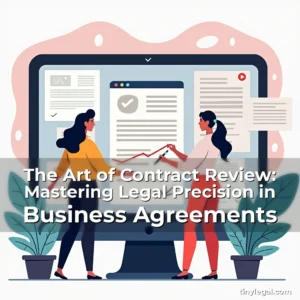
The Art of Contract Review: Mastering Legal Precision in Business Agreements
In today’s fast-paced business environment, the importance of thorough contract review cannot be overstated. Whether you’re an entrepreneur navigating your first partnership or a seasoned executive finalizing a multi-million-dollar deal, understanding how to effectively review contracts is crucial.
Contract reviews serve as both a shield and sword in legal matters, protecting parties from potential pitfalls while ensuring that mutual obligations are clearly defined. This guide will explore various aspects of contract review, helping you gain confidence in handling these critical documents.
Understanding What Makes a Good Contract Review
A good contract review goes beyond merely reading through each clause; it involves a meticulous examination of every term and condition that governs the relationship between two parties.
Effective reviewers look for clarity in language, consistency across clauses, and alignment with organizational goals. They also ensure that all terms used within the document accurately reflect what was verbally agreed upon during negotiations.
Moreover, identifying any ambiguities or inconsistencies early can prevent future disputes. It’s essential not only to understand what has been written but also why certain provisions were included or excluded.
To conduct a successful review, professionals often use checklists tailored specifically to their industry or type of agreement being reviewed. These tools help maintain focus on key areas such as liability limits, dispute resolution mechanisms, and termination conditions.
Regular practice enhances one’s ability to spot red flags quickly—whether they relate to payment schedules, performance metrics, or confidentiality requirements.
- Clarity: Ensuring that all terms are unambiguous so there’s no room for misinterpretation later down the line.
- Consistency: Verifying that similar issues addressed in different parts of the contract align logically without contradiction.
- Alignment: Confirming that contractual obligations match up with strategic objectives set by stakeholders involved.
Why Conducting Thorough Contract Reviews Matters More Than Ever
With increasing complexity in modern agreements due to globalization and digital transformation, conducting thorough contract reviews has become imperative for businesses worldwide.
This heightened need stems from factors including cross-border transactions which introduce elements of international law, data privacy regulations affecting cloud services agreements, and evolving intellectual property rights frameworks influencing technology partnerships.
Failing to properly assess these nuances could lead to significant financial losses or reputational damage if unforeseen liabilities arise post-signature.
Additionally, recent trends show rising litigation rates related to poorly drafted contracts highlighting just how vital rigorous scrutiny really is before sealing deals.
Essential Steps Involved In The Process Of Reviewing Contracts
The process typically begins with obtaining copies of all relevant documents associated with the proposed arrangement. These may include notarized forms, appendices containing technical specifications, or supplementary letters outlining additional stipulations.
Once gathered, initial readings provide context regarding overall structure and intent behind creating the particular agreement under consideration.
Following this preliminary scan comes focused analysis where each segment gets examined individually against predefined criteria established earlier based on known risks or priorities identified at onset.
Detailed assessments require attention to fine print detailing things like governing law jurisdictional specifics or force majeure scenarios that might impact fulfillment timelines significantly.
After completing individual evaluations, compiling findings into structured reports allows stakeholders easy access to summaries highlighting major concerns found along with recommendations aimed towards mitigating them effectively.
Finally, presenting conclusions back to decision-makers enables informed choices concerning whether moving forward remains advisable given current knowledge available about potential implications tied closely to accepted terms.
Common Pitfalls To Avoid During Your Next Contract Review Session
Mistakes made during contract reviews can have far-reaching consequences ranging from minor inconveniences up through complete dissolution of business relationships built over years.
One frequent error occurs when reviewers overlook seemingly insignificant clauses believing them too trivial to warrant serious thought until something goes wrong unexpectedly.
Such oversight could result in situations where breach notifications come suddenly because some hidden obligation wasn’t acknowledged until after events had already transpired causing irreparable harm.
Similarly, failure to consult subject matter experts whenever encountering unfamiliar terminology increases chances of misunderstanding core principles underlying complex provisions.
Without expert input, even well-intentioned individuals risk making decisions based solely upon surface level interpretations rather than deeper contextual meanings embedded within specialized jargon common among lawyers.
Last but certainly not least, neglecting regular updates to personal knowledge bases regarding changing legislation affects accuracy levels achieved during analyses conducted subsequently thereafter.
Tools And Resources That Can Enhance Efficiency Throughout A Contract Review Cycle
Leveraging appropriate technological solutions streamlines many manual tasks traditionally performed manually thereby reducing human error possibilities dramatically.
Software platforms designed explicitly for managing legal documentation offer features such automated redlining capabilities allowing users easily track modifications suggested throughout negotiation phases conveniently.
Cloud-based collaboration environments facilitate real-time edits enabling multiple participants simultaneously working together regardless geographical distances separating them physically.
Furthermore, AI-driven analytics assist in detecting patterns indicative of high-risk areas requiring closer inspection thus prioritizing efforts smartly instead randomly scanning entire texts unnecessarily.
Legal research databases grant instant access vast repositories filled with precedents establishing norms guiding acceptable practices applicable globally across jurisdictions encountered regularly nowadays.
Lastly, maintaining organized archives digitally ensures quick retrieval whenever revisiting previous iterations useful for comparisons purposes determining effectiveness improvements implemented successfully previously.
How Experience Shapes Expertise Within The Field Of Contractual Analysis
Experience plays pivotal role shaping expertise necessary becoming proficient reviewer capable discerning subtle differences between standard templates versus customized proposals crafted uniquely according client needs.
Seasoned practitioners develop intuition recognizing typical traps laid out intentionally or unintentionally depending upon intentions motivating drafters originally responsible preparing original versions submitted awaiting approval.
Through repeated exposure diverse scenarios encountered frequently throughout careers spent immersed deeply inside legal professions, veterans acquire skills distinguishing genuine threats posed versus mere theoretical concerns lacking practical relevance.
This accumulated wisdom manifests itself visibly when reviewing complicated instruments involving exotic commodities traded internationally necessitating familiarity nuanced rules regulating those markets precisely.
Continued education keeps pace advancements occurring rapidly especially fields governed strict regulatory environments demanding constant vigilance staying abreast latest developments impacting everyday operations profoundly.
Best Practices For Maintaining Consistent Quality Across All Contract Reviews Performed Regularly
Implementing standardized procedures guarantees uniformity achieving desired outcomes consistently irrespective varying circumstances faced repeatedly daily routines.
Establishing clear guidelines outlines expectations everyone participating process understands responsibilities assigned accordingly minimizing confusion arising misunderstandings.
Periodic audits verify adherence protocols maintained faithfully avoiding deviations creeping unnoticed leading degradation standards overtime gradually eroding trust placed upon systems relied heavily upon critically important functions fulfilled reliably.
Training programs refresh foundational knowledge reinforcing fundamentals periodically preventing erosion caused forgetting basic tenets taught initially upon entering profession freshly graduated newcomers recently joined teams expanding workforce continually growing organically naturally.
Cultivating culture valuing continuous improvement encourages innovation promoting creativity finding better ways doing things currently considered optimal sufficient meeting minimum requirements barely adequate satisfactory results obtained merely acceptable quality levels achieved sufficiently.
Conclusion
Mastering the art of contract review equips individuals with invaluable skills essential navigating intricate web modern commerce demands proficiency comprehending multifaceted nature agreements executed routinely facilitating smooth functioning economies thriving continuously.
By adopting systematic approaches leveraging advanced technologies enhancing efficiencies combined diligent application learned techniques acquired through extensive experiences gained progressively over time, anyone aspiring excel within field professional legal services stands poised succeed confidently accomplishing objectives pursued passionately relentlessly pursuing excellence always striving surpassing expectations exceeded consistently exceeded measured objectively verifiably demonstrated conclusively proven undeniably.